Primary Causes of Attic Rain in Calgary Homes
Attic rain in Calgary is rarely caused by a single issue. It is typically the result of multiple building envelope failures interacting under extreme winter conditions. Understanding these contributors is critical to preventing recurring moisture damage.
Storage in the Attic and Airflow Restriction
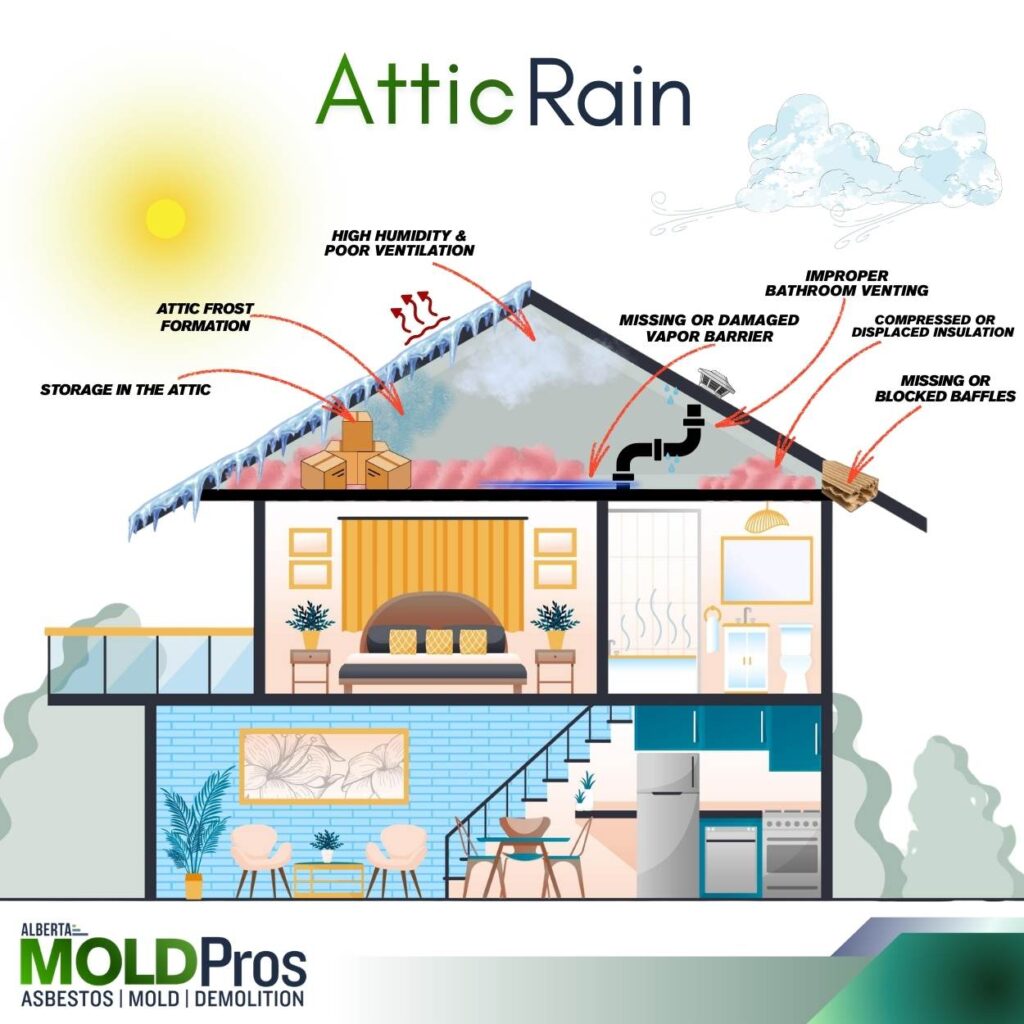
Using attic space for storage can significantly disrupt ventilation pathways. Stored boxes and belongings block soffit airflow, compress insulation, and reduce effective R-value. When insulation performance drops and ventilation becomes restricted, warm interior air remains trapped longer — increasing condensation potential and frost accumulation on roof sheathing.
Attic Frost Formation from Dew Point Failure
Attic frost forms when warm, moisture-laden air rises due to stack effect and reaches cold roof sheathing below its dew point temperature. In Calgary’s winter climate, this frost can accumulate over extended cold periods before melting during temperature fluctuations, leading to attic rain events.
High Indoor Humidity and Ventilation Imbalance
Excess indoor humidity — particularly during winter — increases vapor pressure inside the home. When attic ventilation is insufficient or imbalanced, heat and moisture cannot escape efficiently. This creates prolonged condensation cycles that accelerate frost buildup and mold risk.
Missing or Damaged Vapor Barrier
The vapor barrier is designed to restrict moisture movement from conditioned living spaces into the attic assembly. Gaps, punctures, or improper installation allow vapor drive to push humid air into colder zones where it condenses and freezes. Even small breaches can significantly increase seasonal moisture load.
Improper Bathroom Vent Termination
Bathroom exhaust ducts that are disconnected, poorly sealed, or terminating inside the attic introduce concentrated warm humidity directly into a cold space. This is one of the most common causes of attic mold in Calgary homes and often results in localized frost accumulation near vent discharge points.
Compressed or Displaced Insulation (Wind Washing)
Wind washing occurs when exterior air infiltrates the attic and moves across insulation surfaces, reducing thermal resistance. Insulation that is thin, compressed, or displaced during storms creates cold zones where condensation forms more readily. Over time, this temperature imbalance contributes to frost development and attic rain.
Missing or Blocked Baffles
Baffles maintain a clear ventilation channel between soffits and roof vents. When missing or obstructed, airflow is compromised. Without consistent intake and exhaust balance, moisture becomes trapped in the attic space and frost conditions intensify.
Recessed Lighting and Ceiling Penetrations
Unsealed pot lights, attic hatches, plumbing stacks, and electrical penetrations are significant air leakage points. These breaches in the ceiling plane allow warm air to bypass insulation and directly contact cold roof sheathing. The result is localized condensation and increased risk of mold growth around framing members.
Kitchen Range Hood Leakage
Improperly sealed or leaking kitchen exhaust ducts can introduce both heat and moisture into the attic assembly. Combined with cooking vapors, this creates a nutrient-rich moisture source that accelerates microbial growth on roof sheathing.
HRV Imbalance in Modern Homes
Newer Calgary homes are often built with tighter building envelopes and mechanical ventilation systems such as HRVs. When improperly balanced or poorly maintained, indoor humidity levels can remain elevated during winter months. This increases vapor drive into the attic and amplifies condensation risk.
Calgary-Specific – Chinook ‘Freeze–Thaw’ Cycles
Calgary’s climate introduces a unique variable: Chinook winds. These rapid warming events can raise outdoor temperatures by 10–20°C within hours. Frost that accumulated during cold periods melts quickly, saturating insulation and ceiling materials. This repeated freeze–thaw cycling is what transforms attic frost into attic rain — and it is one of the defining risk factors for homes in Calgary.